
By https://www.nba.com/team/1610612761/raptors, Fair use, https://en.wikipedia.org/w/index.php?curid=52809679
The Toronto Raptors currently hold a record of 37 wins and 29 losses, ranking 6th in the Eastern Conference and facing a competitive race to avoid the play-in game. As the playoffs approach, there are questions about their ability to make a meaningful playoff run.
I spent weeks analyzing Raptors games and statistics to evaluate their potential as a playoff threat. Here’s what I found.
The Toronto Raptors find themselves with a disappointing offensive rating of 114.6, placing them in the 19th percentile. The root of this struggle?
Their poor shot selection.
The Raptors attempt just 34.2% of their shots from beyond the arc, converting at a mere 34.8%, which ranks them in the 25th and 23rd percentile respectively. For teams that shoot fewer threes, they normally compensate by taking more of their shots at the rim, since they are higher percentage shots.
However, the Raptors find themselves in a concerning position, only having slightly below league average attempts at the rim. Meaning those shots are coming from the least effective shots, the mid-range.
The Raptors have a top of the league mid-range shot frequency of 33.6%, despite this high volume, their success rate on these attempts is a mere 43.6%. This reliance on mid-range shooting over three-pointers raises serious questions about the overall efficiency and health of their offense.
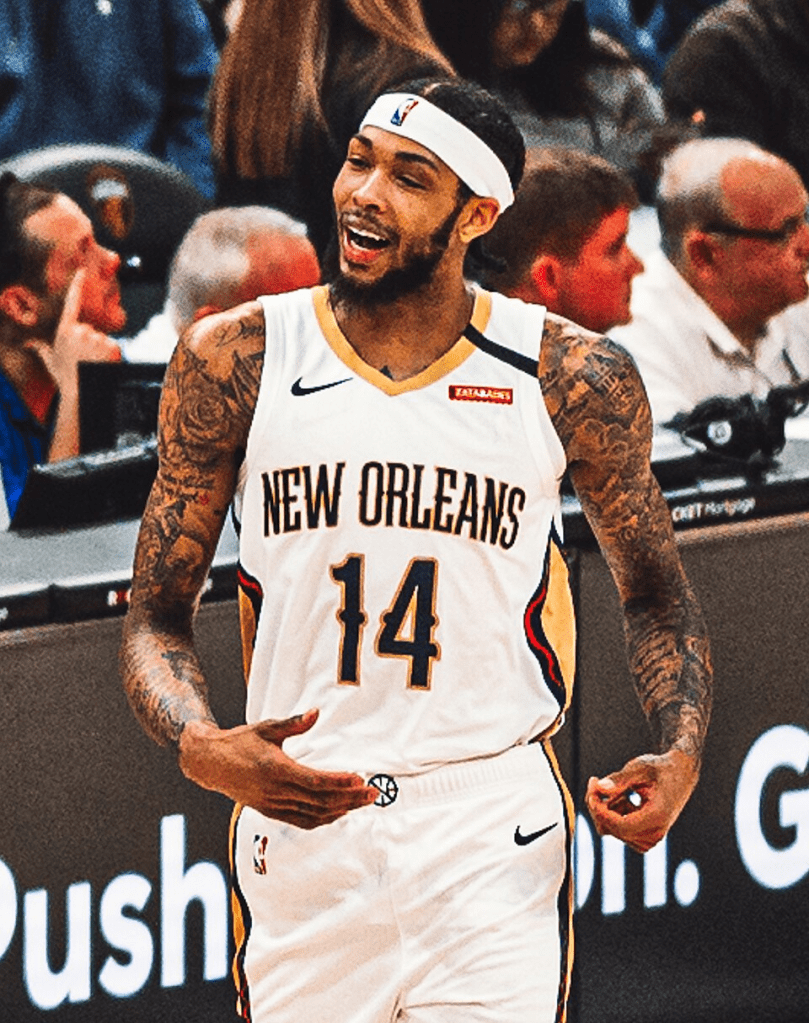
By Erik Drost – Zion Williamson and Brandon Ingram, CC BY 2.0, https://commons.wikimedia.org/w/index.php?curid=129853686
The biggest culprit behind their poor shot chart is Brandon Ingram.
With a team leading 26.8 usage percentage, Ingram is shooting a staggering 55% of his shots from mid-range, ranking him in the 99th percentile amongst wing players in the league. To make things worse he is only shooting 45% on those mid-rangers, leading to a meager 52.3 effective field goal percentage.
Meaning Ingram is using the outsized number of touches he gets to take most of his shots from mid-range, which he doesn’t make at a high percentage point. Instead of taking more shots from three or attempts at the rim, which have a higher average effectiveness around the league.
While watching Ingram I repeatedly noted how he was very aggressive attacking off the dribble and off screens, which can be a good thing, but in his case, he could never create an advantage with that aggression. Always finding himself losing his dribble or getting walled off from the paint, forcing him to take contested step back and turnaround jumpers.
While the Raptors don’t have great shooters to put around him, he is more than willing to take a very difficult jumper rather than pass out to reset the offense or let another player try to create themselves. His struggles to create advantages off the dribble put the team at a massive disadvantage when he’s on the floor on offense and contribute a considerable amount to the poor shot chart I went over earlier.
Even with their lackluster offense, they still managed to position themselves to potentially land a top 6 playoff spot this season. How? It’s been their excellent defense.
Sporting a defensive rating of 113, the Raptors are seventh in the league ahead of good defensive teams like the Rockers, Timberwolves, and the Magic. The reasons I want to highlight are opponent transition frequency and shot selection.
Starting with transition, the Raptors are allowing a 13.6% transition frequency, amongst the lowest in the league. By forcing teams into half-court offense, the Raptors are able to use the matchups and the defensive schemes they want more often. Putting them in advantageous positions right off the bat.
In the rare moments when they find themselves in transition plays, this defense excels, yielding just 118.1 points per 100 transition plays, solidifying themselves as one of the best units in the league in that department.
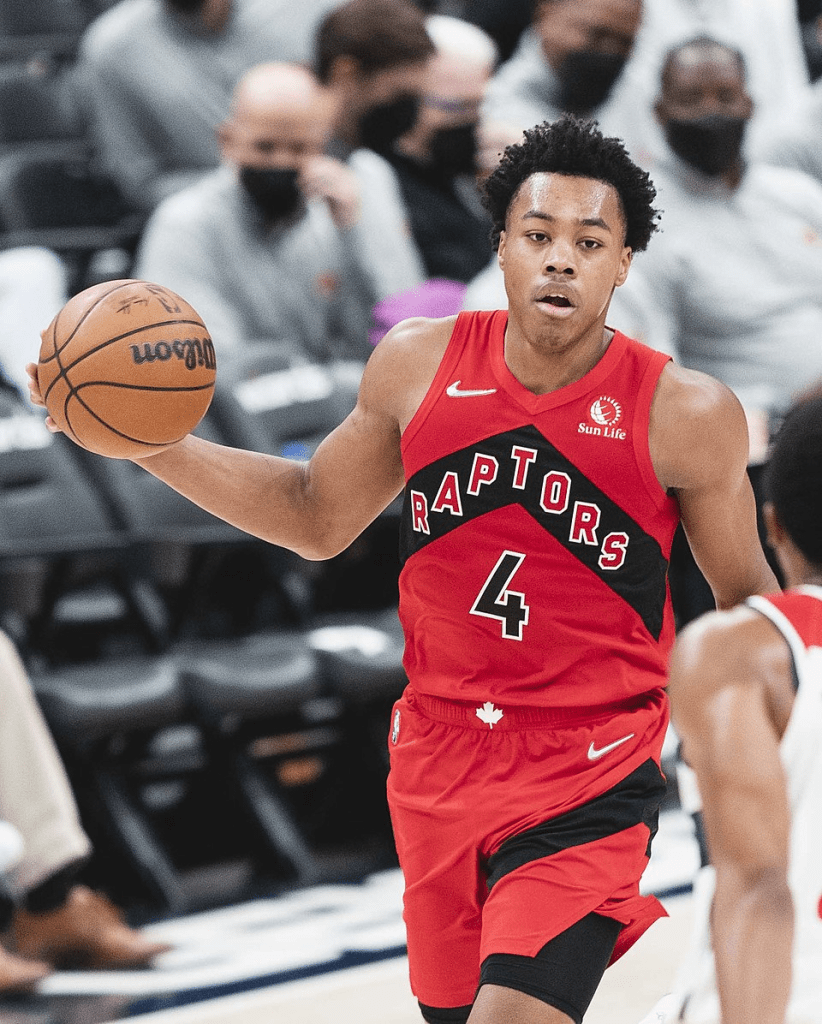
By All-Pro Reels from District of Columbia, USA – WizardsRaptors_119, CC BY-SA 2.0, https://commons.wikimedia.org/w/index.php?curid=113911765
When they get teams into half-court offense scenarios, they are excellent at forcing opponents to take the shots they want. Allowing only 38.9% of opponent’s shots from 3 and 32.4% of shots at the rim, nearly top ten in the league in both categories.
With so few shots being taken from 3 and at the rim, teams are shooting an outsized 28.7% from mid-range and the Raptors are allowing 42.4% shooting from mid-range. Meaning they are forcing teams to take bad shots and teams are shooting a low percentage on those shots compared to the league average.
Creating a nightmare for teams to navigate as the Raptors use their length and athleticism to slow teams running in transition off of misses, then forcing those teams to take bad shots in the half court.
As the playoffs loom, the Toronto Raptors find themselves in a solid position with a 37-29 record, currently holding the 6th spot in the Eastern Conference. However, despite their playoff bound potential, the team struggles with offensive efficiency, posting a poor offensive rating of 114.6. This shortfall is largely attributed to questionable shot selection, particularly an over reliance on mid-range attempts that fail to convert. Brandon Ingram’s love for these low-percentage shots further compounds the Raptors’ scoring challenges. On the defensive end, though, the Raptors shine, ranking seventh in the league with a defensive rating of 113. Their knack for forcing opponents into tough shooting situations has been crucial for keeping their playoff hopes alive.
 Shoot For It
Leave a comment